
Introduction
Korean sunscreen is known for light textures, a finish that does not feel sticky and PA labels that show UVA protection clearly. This guide explains what SPF and PA mean, how to choose by skin type, and how much sunscreen to apply and how often. It also puts the four Korean sunscreens sold at K-LAB side by side, based on what their packaging and product cards say.
1. Why are Korean sunscreens so popular?
Any correctly labelled sunscreen delivers the protection it states; the difference with Korean sunscreens is mostly texture. Formulas are usually creams or gels that absorb quickly, sit well under make-up and are made for daily use. In Korea sunscreen is the essential last step of the routine, so brands focus on texture, hydration and skin feel. Many also contain care ingredients such as centella, propolis or hyaluronic acid.
2. What do SPF and PA mean?
SPF shows protection against UVB rays, which cause sunburn. PA is the rating used in Japan and Korea for protection against UVA rays, which play a part in skin aging and dark spots; it runs from PA+ to PA++++, and more plus signs mean higher UVA protection. In Europe the same information is given by the "UVA" logo in a circle on the pack. So the PA label does not make Korean sunscreens stronger; it just makes UVA protection easier to read.
3. Four Korean sunscreens side by side
| Product | Protection | Size | Stands out for |
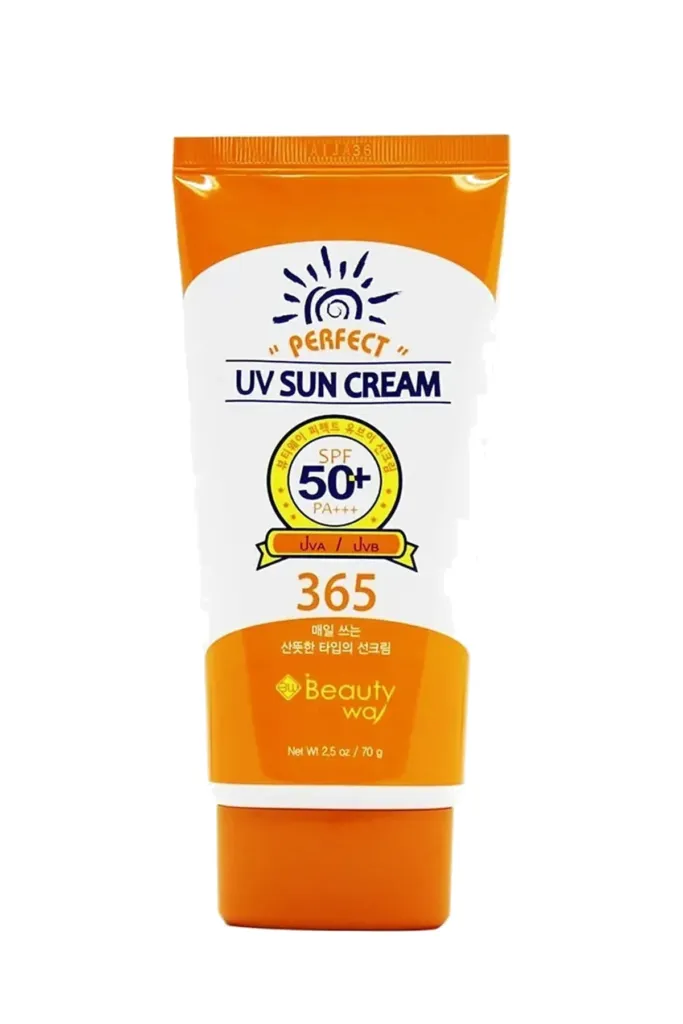
| Beautyway Perfect UV Sun Cream | SPF 50+ PA+++ | 70 g | No white cast, largest size |
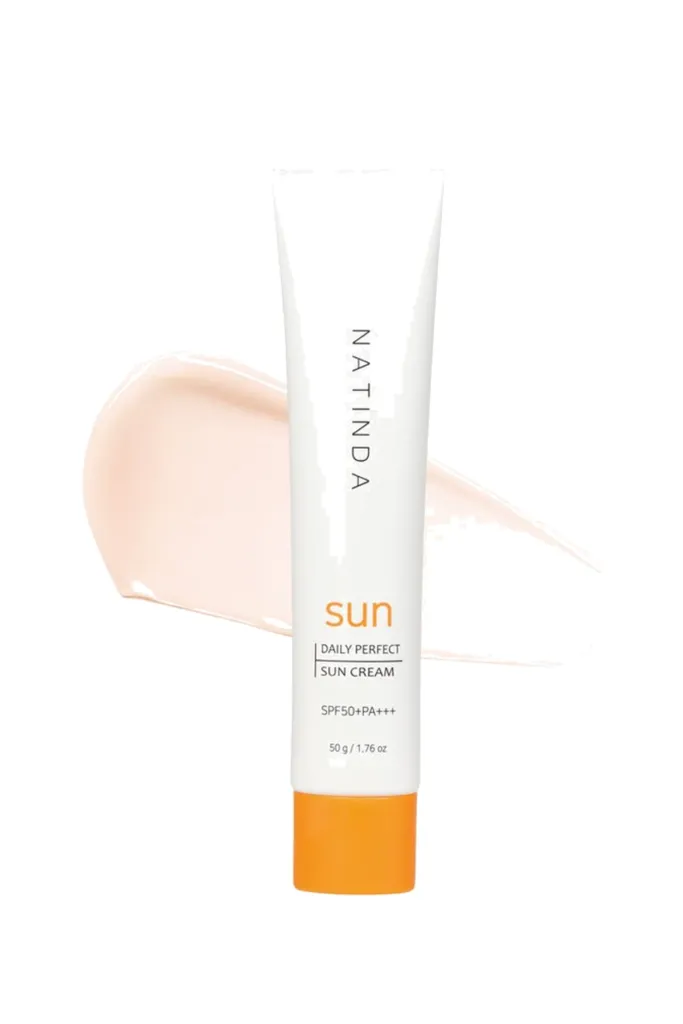
| Natinda Daily Perfect Sun Cream | SPF 50+ PA+++ | 50 g | Moist, soft texture |
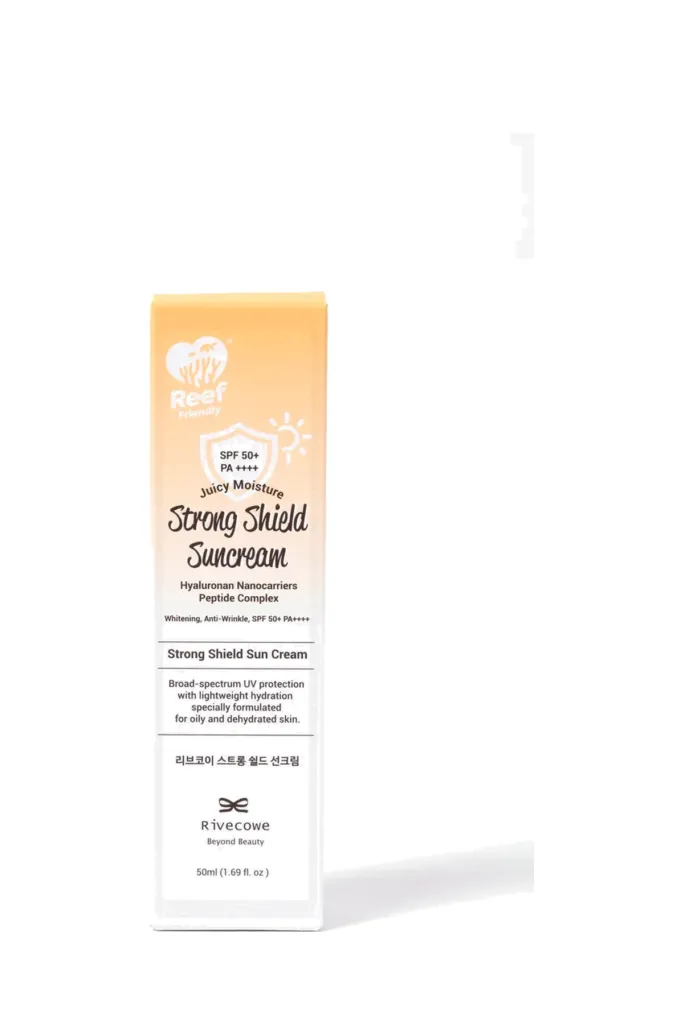
| Rivecowe Strong Shield Sun Cream | SPF 50+ PA++++ | 50 ml | Highest UVA rating, light for oily skin |
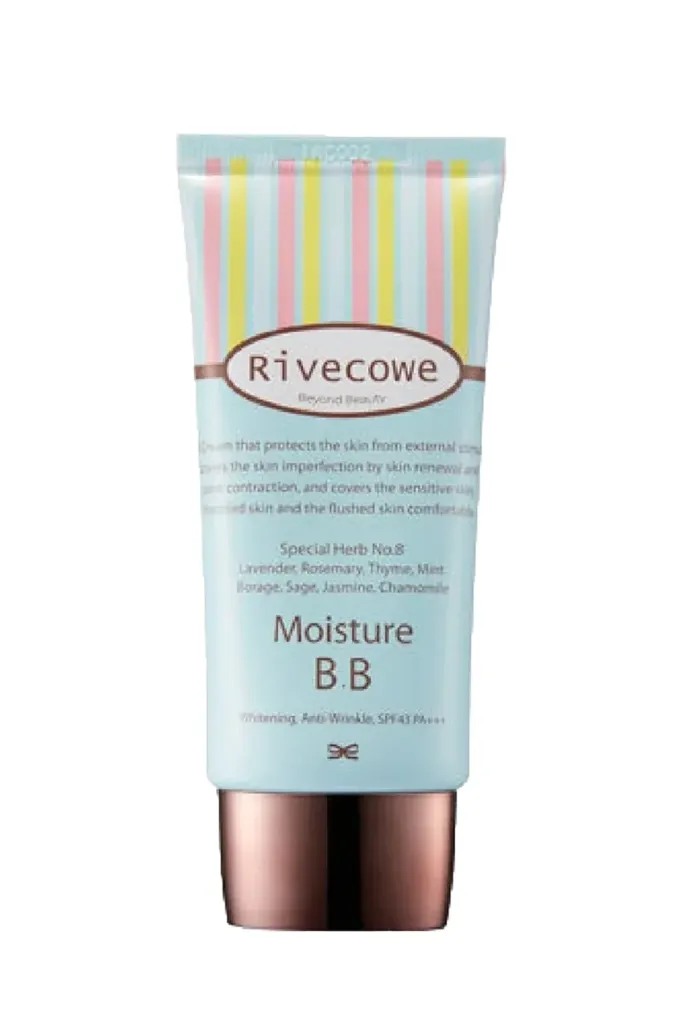
| Rivecowe BB Cream | SPF 43 PA+++ | 40 ml | Light coverage |
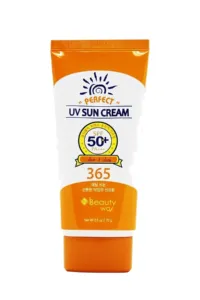
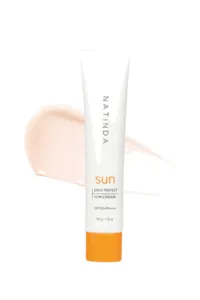
4. Beautyway Perfect UV Sun Cream (70 g)
SPF 50+ PA+++. A hydrating cream known for leaving no white cast and absorbing without feeling sticky. The formula contains centella, chamomile, coconut, sea buckthorn, rosehip and propolis extracts. As the largest size on the list, it is economical for daily use and for covering the neck and chest too. See Beautyway UV Sun Cream
5. Natinda Daily Perfect Sun Cream (50 g)
SPF 50+ PA+++. A cream made for everyday use with a moist, soft texture that does not feel sticky. The formula contains centella, coconut, sea buckthorn, rosehip and propolis extracts. A comfortable everyday option for dry and normal skin, and the most-reviewed sunscreen at K-LAB. See Natinda Daily Perfect Sun Cream
6. Rivecowe Strong Shield Sun Cream (50 ml)
SPF 50+ PA++++, the highest UVA rating on this list. The tube lists hyaluronic acid carriers and a peptide complex; a light, hydrating texture made especially for oily and dehydrated skin. It leaves no greasy feel and works under make-up. The pack also carries a Reef Friendly label. See Rivecowe Strong Shield
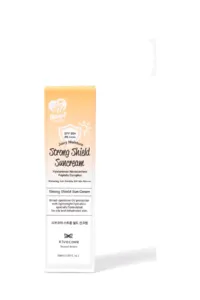
7. Rivecowe BB Cream SPF 43 PA+++ (40 ml)
A hydrating BB cream that evens out skin tone with light coverage. Alongside an 8-herb blend of lavender, rosemary, thyme, mint, borage, sage, jasmine and chamomile, it contains allantoin, adenosine and a vitamin E derivative. Handy for days in the city with little time in the sun. On the beach or on long days outdoors, wear a separate SPF 50 sunscreen underneath; we rarely apply BB cream thickly enough for full protection. See Rivecowe BB Cream
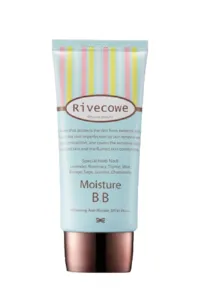
8. Choosing a Korean sunscreen by skin type
- Oily and combination skin: the light, non-greasy Rivecowe Strong Shield. Oily skin care
- Dry and normal skin: the moist Natinda Daily Perfect Sun Cream. Dry skin care
- Every day, larger areas: the 70 g Beautyway UV Sun Cream
- Light coverage: Rivecowe BB Cream SPF 43 (with SPF 50 underneath in strong sun)
- Sensitive skin: whichever you choose, try a small area under the jaw first. Sensitive skin care
9. How much, and how often?
To get the protection on the label, the face and neck need roughly two finger-lengths of cream. Apply it about 15 minutes before going out. Outdoors, reapply every 2 hours, and straight after swimming, heavy sweating or towelling off. UVA rays reach the skin on cloudy days and in winter too.
10. Where sunscreen goes in your routine
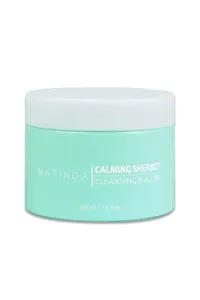
In the morning, sunscreen is always the last care step: cleanser, toner, serum, moisturiser and then sunscreen. If you wear make-up, start a few minutes after sunscreen. In the evening, sunscreen and make-up can be hard to remove in one step; a cleansing balm followed by a foaming cleanser (double cleansing) makes it easier. Natinda Cleansing Balm · Korean skincare routine guide
11. Where to buy authentic Korean sunscreen
K-LAB is the official distributor in Turkey for Natinda, Beautyway and Rivecowe; products are sold authentic and with an invoice at klabcosmetic.com and in K-LAB's marketplace stores. Whichever brand you buy, an invoice, an authorised seller and the expiry date are the easiest ways to tell an authentic product. How to spot authentic Korean cosmetics · All Korean sunscreens
Related K-LAB products
Frequently asked questions
Which is the best Korean sunscreen?
There is no single "best"; it depends on your skin type. Rivecowe Strong Shield suits oily skin, Natinda Daily Perfect Sun Cream suits dry and normal skin, and the 70 g Beautyway UV Sun Cream is a good pick for daily use on larger areas.
What SPF do I need?
At least SPF 30 for everyday city life, and SPF 50 for long days outdoors and at the beach. Whatever you choose, applying enough and reapplying matter more than the number.
What is the difference between PA+++ and PA++++?
Both show UVA protection; PA++++ is the highest rating. If your skin is prone to dark spots or you spend long hours outdoors, you may prefer PA++++.
Are Korean sunscreens better than European or Turkish ones?
Not in protection; any correctly labelled sunscreen delivers the protection it states. The difference is mostly texture: lighter, non-sticky formulas that sit well under make-up.
Do I need sunscreen in winter or on cloudy days?
Yes. UVA rays pass through clouds and glass and reach the skin all year. Wear it as the last step of your morning routine in winter too.
Which one for sensitive skin?
If your skin is very sensitive, try a small area under the jaw first. Mineral sunscreens (zinc oxide, titanium dioxide) are also a common choice for sensitive skin.
Can I wear it under make-up?
Yes. Apply sunscreen after moisturiser, wait a few minutes, then start your make-up. The lightweight Rivecowe Strong Shield and the non-sticky Beautyway both sit comfortably under make-up.
How long does an opened sunscreen last?
The open-jar symbol on the pack (for example 12M) shows how long it lasts after opening. Do not use a sunscreen left over from last summer or one whose colour or smell has changed.